
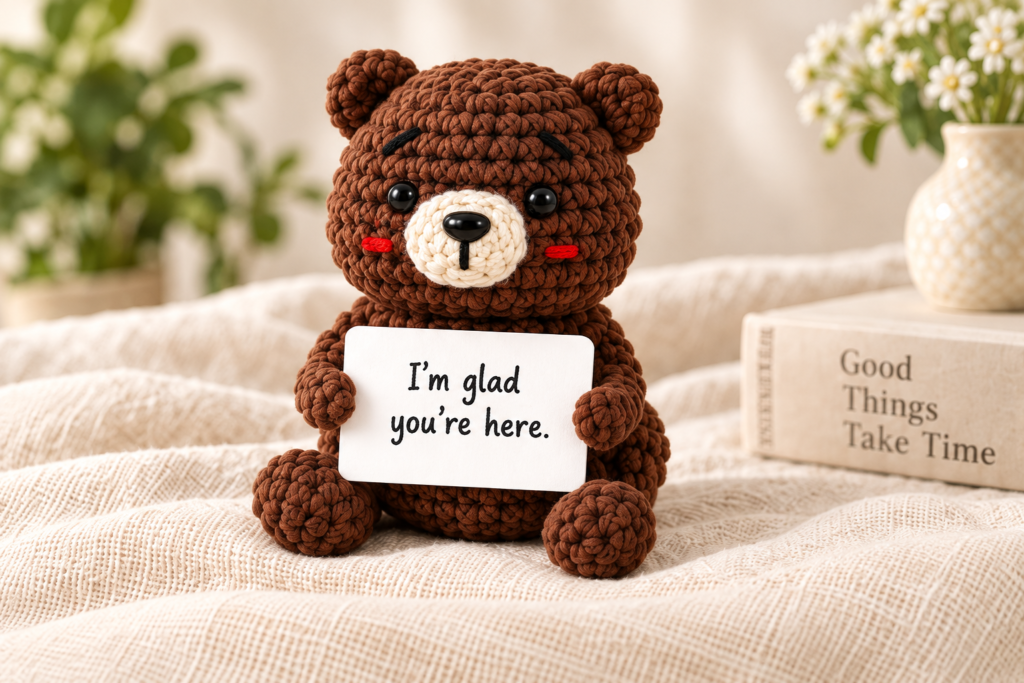
The same character drawing can look very different as a crochet figure and a sewn fabric plush. For a brand project, the difference begins with construction: one builds a surface from yarn stitches, while the other typically joins pieces cut from plush fabric.
This comparison explains how those approaches affect texture, shape and the way a logo or character detail can be represented. Here, “plush” means a sewn fabric stuffed figure. People also use the word loosely for stuffed crochet characters, so describe the construction when discussing a project.
How the outer surface is made
Crochet: the stitches form the surface
Crochet uses a hook to form loops of yarn into stitches, as illustrated in the Craft Yarn Council’s crochet basics. On many small crochet characters, you can see the repeated stitch structure across the body. That visible texture is part of the design.
The yarn and stitch scale influence how fine or chunky the surface appears. The Craft Yarn Council’s yarn-weight guidelines distinguish yarn categories and associated gauge ranges. A reference image with fine stitches should therefore be discussed as a material-and-construction reference, not just a color reference.
Sewn plush: fabric pieces form the shell
A sewn plush character starts with fabric pattern pieces that are joined and filled. Fabric maker Shannon Fabrics describes this process in its stuffed-animal guidance. The fabric’s pile, the seams and the filling influence the finished appearance and feel.
“Plush” does not describe one uniform surface. A short-pile fabric and a long furry fabric can give the same outline very different looks. Likewise, two crochet figures can feel different when the yarn or filling changes. The category name alone does not specify softness.
A practical comparison for a character brief
| Design question | Crochet figure | Sewn fabric plush |
|---|---|---|
| What is visible up close? | The yarn and stitch pattern are often prominent. | The fabric surface or pile is usually prominent. |
| How is the shape described? | Through crocheted forms and their joined parts. | Through fabric pattern pieces, seams and filling. |
| What defines a color boundary? | It may follow yarn changes, stitches or attached details. | It may follow fabric panels or added decoration. |
| How should a brand mark be specified? | Identify whether it belongs on the character, card or packaging. | Specify the proposed decoration method and position. |
| Can the finished feel be inferred from a photo? | A photo shows texture better than firmness or softness. | Pile appearance alone does not establish the feel of the filled item. |
Why small design details need a different treatment
A drawing can include a fine line, a tiny letter or a subtle color transition with little effort. A physical character has a surface, thickness and a finite size. Details must be translated into that construction.
For a crochet interpretation, a narrow color stripe may occupy only a few stitches at the intended size. Ask whether it should be widened, simplified or represented in another way. For a fabric interpretation, ask how the detail relates to a seam or the proposed surface decoration. Do not assume a technique available from one supplier is available from another.
Consider this hypothetical character: a round coffee cup with a broad smile and a small company name. The silhouette and smile can define the character, while a separate card carries the name. That separates the three-dimensional identity from exact lettering. It is a design option to discuss, not a promise that a particular construction has been approved.
Character branding and printed branding are separate decisions
A branded gift does not always need every brand element reproduced on its body. Decide which elements make the character recognizable and which information must remain exact.
- Character identity: the outline, face and main color areas.
- Exact brand information: the approved name, logo artwork or campaign wording.
- Presentation: the card, tag or packaging where the information will be seen.
For Xyluria projects, photos, logos and new character requests are reviewed before their production method is confirmed. The personalized gift page shows the distinction between a crochet character and its message card. A logo shown in a concept image should not be treated as confirmation that it can be reproduced directly in yarn.
What the material name cannot tell you
Neither “crochet” nor “plush” establishes a product’s fiber composition, washability, durability or environmental impact. Ask for the actual product specification when one of these matters to the project.
The terms also do not establish which design will cost less. Compare an equivalent size, level of detail and presentation before drawing a conclusion. A simplified character and a figure with many separate parts are different production briefs, even when both use the same construction.
For visual direction, describe the result you want to see: obvious yarn texture, a smooth fabric surface, a compact rounded silhouette or a prominent furry outline. Concrete descriptions help a maker interpret the brief more clearly than “premium” or “high quality” alone.
Discuss a crochet interpretation of your brand character
If visible yarn texture is central to your idea, share your artwork and identify the details that should define the crochet version. Xyluria reviews new crochet designs from 50 pieces; feasibility and available branding options are confirmed for the project.
Request a custom crochet design review and tell us which features belong on the character and which could appear on a card or packaging. Once a sample is ready, use our custom crochet sample approval checklist to review the physical result.